IN BRIEF: We identified which CAHPS measures were truly movable and turned that insight into focused, coordinated action, helping one health plan move its overall CAHPS score by one Star in its first year.
For one long-tenured regional health plan, CAHPS pressure was becoming harder to ignore. One contract had stagnated in CAHPS performance while another had declined, putting greater focus on how the plan could move scores before the next survey cycle.
The plan had no shortage of CAHPS improvement efforts. It was already investing in surveys, outreach, and member experience initiatives. But those efforts were not consistently connected to a clear strategy for improving performance, and despite the activity, the plan continued to struggle across measures.
The data in hand showed where measure scores were low, but there was far less clarity around which measures were truly movable, which members and experiences were driving performance, and which interventions were most likely to change those experiences.
The opportunity was not to collect more information. It was to turn what the plan already knew into focused, coordinated action. We were brought in to close that gap, creating a clearer operating strategy for where to focus, what to change, and how to shift the trajectory.
We started by connecting the plan’s existing sources of information to build a clearer picture of where CAHPS performance could move. We analyzed interim survey responses alongside member characteristics, service interactions, calls, complaints, and other available experience signals. The goal while looking at this data was to move beyond aggregate scores to understand which members were experiencing what challenges, and whether those experiences were still current.
From there, we evaluated CAHPS measures based on both their importance and their potential to move. Rather than trying to address every underperforming measure, we prioritized the areas where the opportunity was meaningful, the member experience was addressable, and the intervention could realistically make a difference within the next survey window. This turned a large amount of member and operational data into a focused set of measures, member groups, and experiences worth acting on.

With priorities defined, we built an intervention strategy around the specific experiences we wanted to influence. Using insights from behavioral science, our library of interventions, and member information, we determined who needed an intervention, why it mattered, and what method, channel, and timing gave us the best chance of changing the experience or its perception.
That meant different members received different types of intervention:
But member outreach was only one part of the intervention. We also embedded directly with customer service, working across three member-facing departments and roughly 200 representatives to improve scripts, probing questions, escalation, quality review, and representatives’ ability to resolve member issues. We incorporated provider engagement, complaint monitoring, operational processes, and cross-functional campaign management where those levers could affect the member experience.
And we did it quickly. With roughly two months before the CAHPS survey period, we launched the highest-priority interventions while simultaneously building the governance, measurement, and repeatable processes needed to sustain the work beyond the immediate survey window.
Two of these interventions were built to do more than execute, they were built to teach. The customer service scripts guided the conversation, and captured what members were describing, which complaints kept coming up, where reps got stuck, what was really driving a bad experience. That information moved back through the service team and shaped the next round. Reps got revised probing questions, call flows changed, and escalation paths were rebuilt around what the first cycle surfaced.
Member surveys ran the same way. Each round told the team something useful for the next one, which members still needed outreach, which messages were landing, and where the gap still hadn’t closed. That loop wasn’t built for one survey cycle. It became part of the same repeatable infrastructure the team was building everywhere else, meant to outlast the immediate survey window.
Our approach improved CAHPS performance across both contracts.
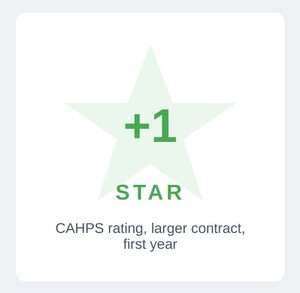
The results came from more than a new communication strategy. We connected the data, the member, the experience, the intervention, and the organization responsible for delivering it. In all, this turned CAHPS from a measurement exercise into an ongoing system for identifying where change was possible and acting on it.
Most importantly, the work did not end with the upcoming survey window. Alongside the near-term interventions, we helped establish governance, measurement, segmentation, feedback loops, and cross-functional processes designed to make CAHPS improvement more repeatable, setting the plan up for continued success in the coming years.
They have an activation problem, plenty of data and activity, but no clear connection between what it says and what the organization does about it. That gap shows up everywhere member experience gets measured, not just CAHPS.

A practical framework for deciding which CAHPS measures are worth moving, and what it takes to move them.