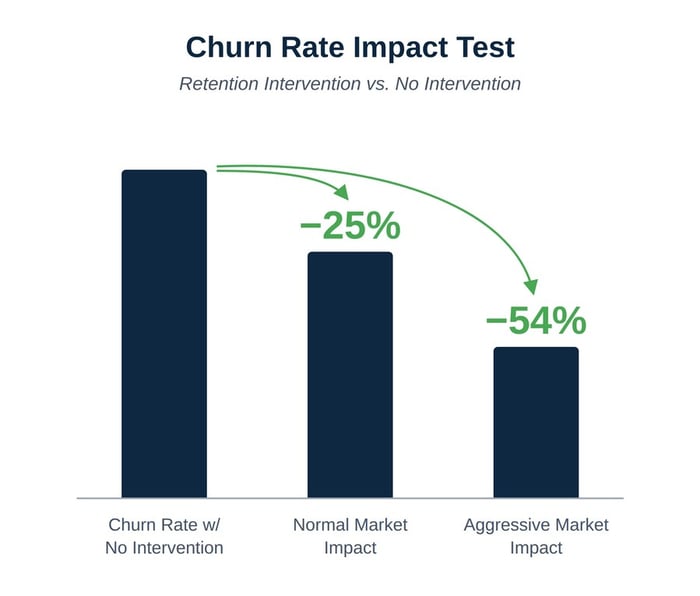
IN BRIEF: Limetree uncovered what was driving D-SNP churn and helped a plan intervene while members were still deciding whether to stay, ultimately reducing churn by 54% in the first year.
D-SNP churn is a growing challenge for Medicare Advantage (MA) plans. As benefit changes and a changing competitive landscape give members more reasons to reconsider their coverage, plans are facing a particularly difficult retention problem. Members can be satisfied with their plan and still have a reason to leave it.
For one national MA plan, that gap was becoming harder to ignore. D-SNP churn had reached its highest level in seven years, even as member satisfaction remained very high. With upcoming benefit reductions threatening to put even more members in the market, the plan needed to understand what was driving members to leave.
Limetree was tasked with looking beyond satisfaction scores to understand the member journey, from benefit use and member experience to competitive pressures and the factors that could push someone toward disenrollment. The work was designed to identify who was most vulnerable to churn, why they were at risk, and where the plan could intervene before members made the decision to leave.
Limetree took a multifaceted approach to understanding retention, bringing together several sources of insight.
We conducted member interviews to hear directly from members about their experiences with the plan, an ongoing member satisfaction survey to identify patterns across the broader membership, and a survey of recently disenrolled members to understand what ultimately drove them to leave. We then connected those findings with plan-level data to look for relationships between member behavior, benefit use, satisfaction, and disenrollment.
The research revealed that members were leaving for multiple reasons. Among members who voluntarily disenrolled, 72% cited better benefits as a reason for leaving, with flexible "extra" benefits such as food and utility allowances playing a particularly important role. Others left after frustrations with customer service, transportation, provider access, billing, or claims.
Those differences mattered. Members who left because of product issues were significantly more likely to consider returning than those who left because of service issues.
We also dug below the surface of these trends. Some members were not aware of all their benefits. Some former members didn't mean to leave the plan. And some current members reported returning to the plan after having bad experiences with plans that promised better benefits.
The findings showed that not all churn was equally preventable, and that the path to churn could point to different opportunities for intervention. Understanding what was driving an individual member's decision became critical to knowing where and how the plan could intervene.

Most retention efforts focus on broad outreach to members during open enrollment, or after they have left and become a reengagement opportunity. Limetree saw an opportunity to move that intervention earlier, while members were still evaluating their options. Instead of waiting for disenrollment to signal that a member was at risk, we wanted to identify those signals while members were still in the market and intervene while there still was an opportunity to influence their decision.
We translated the research findings into a predictive churn model that used member-level signals, including benefit utilization, satisfaction, competitor risk, and member history to identify members at different levels of churn risk. Members were then classified into churn-likelihood deciles, allowing the plan to prioritize those most likely to leave and intervene before they began shopping.
But knowing who was likely to leave was only half the equation. The next question was more important.
What could persuade those members to stay?
That's where behavioral science came in. Limetree mapped the member decision-making process and developed four communication treatments designed around the specific drivers of this plan's D-SNP churn, including uncertainty, loss aversion, benefit salience, and trust.
We built the churn model to keep learning, not to run once. Every treatment was tested against a holdout group, allowing Limetree to measure its impact on actual retention, both within each year and from one year to the next.
That communications performance analysis fed straight back into the model. Which members stayed, which treatments made the difference, and where members were still leaving all became inputs for the next round of targeting and intervention.
Learnings from Year 1 informed the next phase, creating a feedback loop that allowed the strategy to evolve as member behavior and competitive pressures changed. Each year, the model got better at finding the members most likely to leave, and the treatments got better at giving them a reason to stay.
The approach produced a significant reduction in churn compared with a holdout group that received no intervention. Year 1 played out in an aggressive market, and Year 2 under more normal market conditions.
The impact of this work went beyond the immediate retention results. The research gave the plan a clearer roadmap for continuing to intervene earlier and work with the product team to identify retention risks.
By connecting member research, plan data, behavioral science, predictive modeling, and intervention testing, Limetree helped shift retention from a reactive effort focused on members after they leave to a proactive strategy that reaches them while they are still deciding whether to stay.
By the time a disenrollment comes through, the decision is already made. Reaching members sooner takes two things, knowing who is at risk and knowing what will change their mind. That second part comes down to how members decide. A handful of patterns shape whether a member switches, stays, or comes back, and a member chasing better extras needs to hear something different from one let down by a bad service experience. Getting the framing, timing, and trust signals right for each is what turns a letter, an email, or a call into a reason to stay.

The five decision making patterns behind Medicare Advantage disenrollment, and how leading plans turn them into lasting member loyalty.